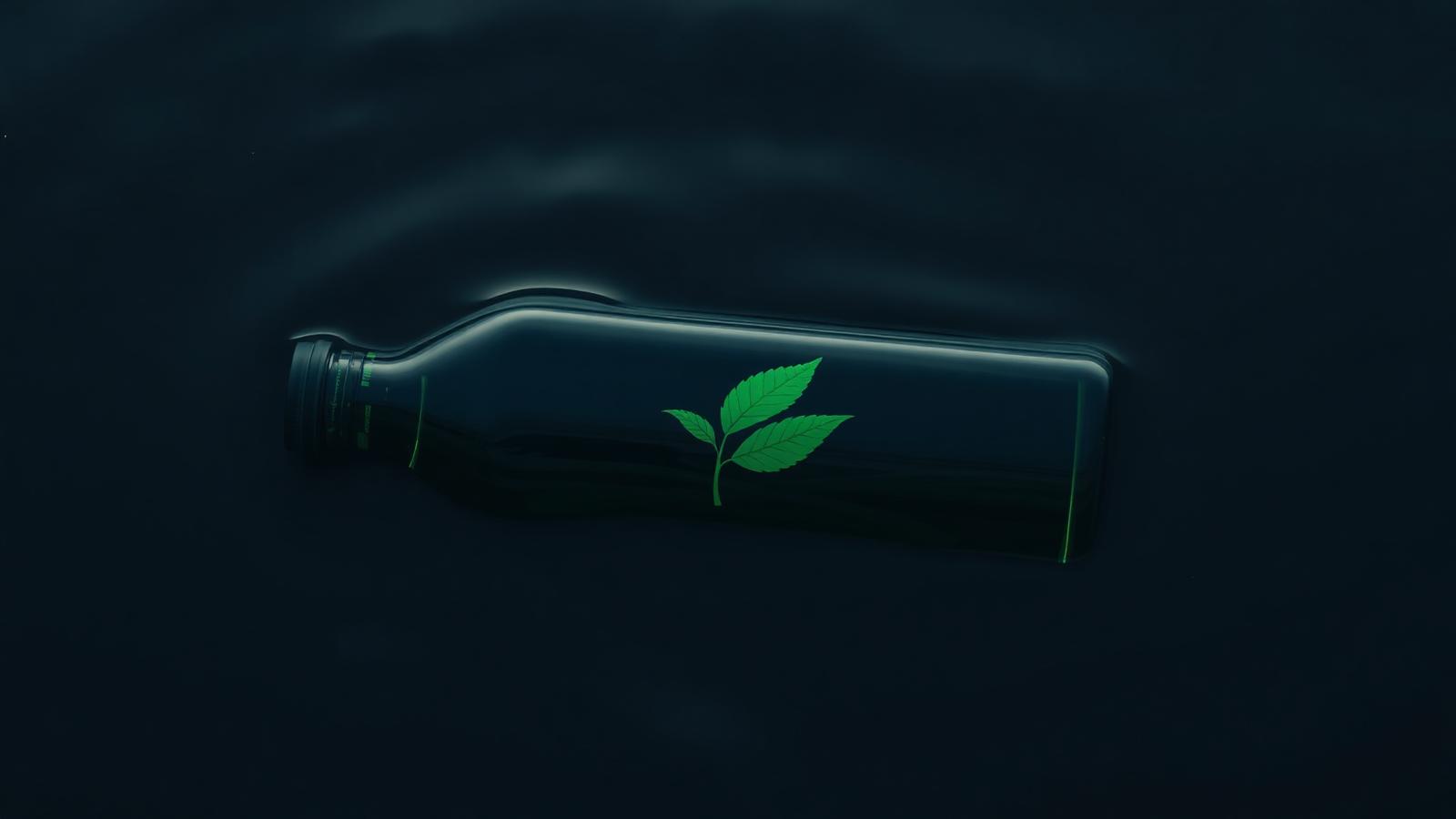
Few words are more abused in modern marketing than "sustainable". The term is used to sell cars, cosmetics, clothes, food, banks, airlines, fossil fuel companies and even cryptocurrency mining operations. It is printed on plastic bottles, attached to fast fashion lines, displayed in oil company commercials and used to justify almost any product imaginable.
If everything is sustainable, nothing is. Greenwashing is the practice of presenting a product, brand or company as more environmentally responsible than it actually is. It works because most consumers care about the planet, do not have time to investigate every claim and want to believe that their purchases are not part of the problem.
Regulating Misleading Environmental Claims
The European Commission found that more than half of environmental claims made by companies in the EU were vague, misleading or completely unsubstantiated. In response, the EU has introduced new rules requiring companies to back up green claims with verifiable evidence. These rules ban generic terms like "eco-friendly", "natural" or "climate neutral" unless they can be proven.
This is a major step. Even so, the practice is so deeply embedded in marketing that it will not disappear easily.
Common Tactics in Green Marketing
Greenwashing usually takes one of these forms:
| The claim | What is really happening |
|---|---|
| "100% recyclable packaging" | The packaging could be recycled, but most ends up in landfill or incineration because local systems cannot process it |
| "Carbon neutral" | The company has bought offsets, often of questionable quality, instead of reducing emissions |
| "Made from natural ingredients" | The product contains some natural ingredients alongside many synthetic ones |
| "Eco-friendly" | An unregulated phrase with no specific meaning |
| "Sustainable collection" | A small part of the product line, while the rest of the business continues as before |
| "Plant-based packaging" | Often partially plant-based, the rest still fossil-based plastic |
| "Supports rainforest projects" | A donation of a few cents per item, used as marketing rather than as restoration |
| "Climate positive" | A vague, scientifically unverified term |
The most cynical examples include oil companies advertising their renewable energy investments while the vast majority of their capital still goes into fossil fuels. Fast fashion brands launch a "conscious collection" while continuing to produce billions of garments a year using exploitative labour and harmful materials.
The Harm of Displacement
What makes greenwashing so harmful is not just the lying. It is the displacement. Every time a consumer is told that the polluting product is now responsible, they are discouraged from looking for genuinely better alternatives.
Consumers are told the problem is already solved and they can keep consuming as before, only with a slightly different label. They are sold relief from guilt rather than real change. This deception slows down the transition to a more responsible economy.
It rewards companies that are good at marketing rather than companies that are good at responsibility. It punishes honest businesses that refuse to overpromise. It can convince people that the system is improving when it often is not.
Demanding Verifiable Evidence
A more honest world would require fewer "green" labels and more transparency through open data. We need to see actual emissions, actual wages, actual sourcing, actual lifespan and actual end-of-life impact. This is information that cannot be reduced to a single green leaf icon.
Until then, scepticism is not cynicism. It is hygiene.
If a company tells you its product is good for the planet, the right question is not "How good?" but "Compared to what, and proven how?"
Diagram · Greenwashing
What it says vs what it usually means
Climate-neutral
Usually offsets, not emission cuts.
Recyclable
Technically yes; rarely recycled in practice.
Made with recycled material
Often only a small percentage, by weight.
Natural
Undefined in most markets.
Eco-friendly packaging
Same plastic, smaller font.