
Corporate social impact is going through an interesting transition.
Companies are not abandoning purpose. Despite economic uncertainty, political pressure and increased scrutiny of corporate responsibility programs, many businesses are continuing to invest in charitable giving, employee volunteering and community initiatives. Benevity's 2026 research found that corporate giving increased year over year, while a record 1.87 million employees contributed nearly 24 million volunteer hours during 2025.
On the surface, that sounds like very good news.
But underneath those numbers is a problem that deserves more attention. The priorities of companies and the needs of nonprofit organizations do not always align. Companies are investing heavily in volunteering, employee engagement and purpose-driven storytelling, while many nonprofits say their greatest needs are still funding, specialist expertise and reliable long-term support. Half of the nonprofits surveyed by Benevity said that large team volunteering events provide little or no long-term capacity.
| What companies often prioritize | What nonprofits say they need most |
|---|---|
| Large team volunteering events | Reliable, long-term funding |
| Employee engagement and visibility | Specialist expertise and skills |
| Purpose-driven storytelling | Consistent, multi-year relationships |
| One-off campaigns | Support that builds real capacity |
This does not mean corporate volunteering is ineffective. Nor does it mean companies should simply replace every social initiative with a donation.
It means we need to ask a better question. Instead of asking, "What can our company do to show that we care?", perhaps the starting point should be, "What do people actually need, and what can our company genuinely contribute?"
That small change in perspective can completely change what a corporate nonprofit partnership looks like.
The best corporate partnerships begin with usefulness
Traditional corporate giving has often followed a familiar pattern. A company selects a cause, allocates a budget, makes a donation or organizes a volunteer day, communicates the initiative internally and externally, and then moves on to the next campaign.
There is nothing wrong with that model. A single donation can fund important work, and one afternoon of volunteering can still make a meaningful difference.
But companies have far more to contribute than money or volunteer hours. Every business is surrounded by resources. It has employees with professional expertise, relationships with suppliers and customers, products, technology, infrastructure, logistics networks, purchasing power, physical locations and access to audiences. In many cases, those resources can be just as valuable to a nonprofit organization as a traditional donation.
A logistics company, for example, already understands how to move goods efficiently. A hospitality business knows how to feed and accommodate people. A technology company employs people capable of solving complex digital problems. A retailer can mobilize customers and distribution networks. A manufacturer may be able to provide products that communities urgently need. A professional-services company might possess legal, financial, marketing or operational expertise that a nonprofit could never afford to purchase.
The opportunity is therefore larger than philanthropy. It is about identifying the point where a genuine social need intersects with something a company is exceptionally well equipped to provide. That is where a donation begins to become a partnership.
Employees want to contribute, but contribution should create value on both sides
Employee volunteering has become an increasingly important part of corporate culture. Benevity reports that 96% of large corporate firms identify employee engagement as one of the leading reasons for investing in volunteer programs.
That makes sense. People want to feel that the organizations they work for stand for something beyond revenue. Volunteering can bring colleagues together, expose employees to communities they might never otherwise encounter and create a sense of shared purpose that is difficult to replicate inside a meeting room.
The challenge is to make that experience equally valuable for the nonprofit.
A hundred employees arriving for a few hours can generate energy and visibility. But organizing a large corporate volunteer group also requires planning, supervision and resources from the organization hosting them. If the activity is designed primarily around the company's desire for participation rather than the nonprofit's actual needs, the value can quickly become one-sided.
The better model starts with a conversation. Perhaps the organization genuinely needs a large group of people for a distribution event. In that case, traditional volunteering may be exactly right.
Practical ways skills-based volunteering creates lasting value
Sometimes a nonprofit needs specialized assistance instead of manual labor.
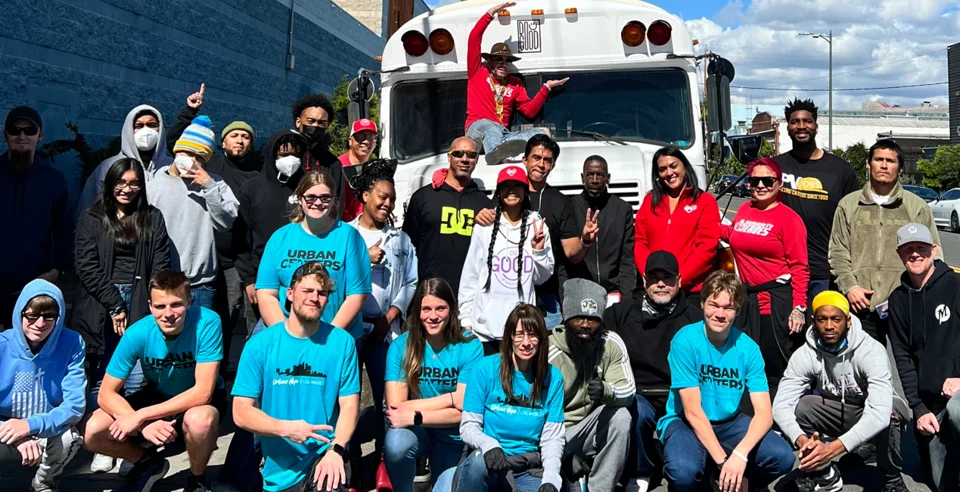
A marketing team might help a nonprofit improve a campaign that brings in new supporters. Developers could repair or rebuild a digital platform. A recruitment team could prepare vulnerable young adults for employment. Finance professionals could strengthen internal processes. A salesperson might make an introduction that eventually becomes a major new partnership.
These forms of contribution may be less visible than a large volunteer event, but their impact can last considerably longer. The best employee programs therefore do not ask only how many people participated or how many hours were logged. They also ask what changed because those employees were there.
Social impact becomes stronger when it connects with the business itself
Some of the most promising corporate partnerships are those in which a company does not have to invent an entirely separate CSR activity. Instead, the company looks at what it already does well and finds a way to make that capability useful.
DO GOOD International's existing partnerships demonstrate how different this can look in practice.
CoAqua, a coconut water company, has donated more than 250,000 cans to support hydration efforts for people in need. Nature's Turn has donated more than 150,000 bags of freeze-dried fruit to outreach initiatives. The Los Angeles Blue Waves have developed a multi-year relationship with DO GOOD around community outreach, youth mentorship and service in Skid Row. Unishippers brings logistics expertise into the ecosystem through a model designed to connect shipping services with humanitarian support.
None of these partnerships follows exactly the same formula. That is precisely the point.
The most interesting question for a prospective corporate partner is not, "Which sponsorship package should we choose?" It is, "What already exists inside our business that could become useful somewhere else?"
For one company, the answer may be funding. For another, it may be products. For another, it may be logistics, technology, expertise, access, employment opportunities or a physical venue. The partnership should be built around the answer rather than forcing every company into the same template.
This approach also makes social impact easier to sustain. When a partnership is connected to capabilities, resources or relationships that already exist inside the organization, it becomes less dependent on a single campaign or annual budget decision. The company can begin to integrate impact into the way it operates.
Long-term relationships create something one-off campaigns cannot
There is another element that is difficult to measure in a quarterly report: consistency.
Many of the social challenges nonprofits work on are not problems that disappear after a successful event. Homelessness, food insecurity, educational disadvantage, environmental damage and lack of economic opportunity are complex issues that require sustained involvement.
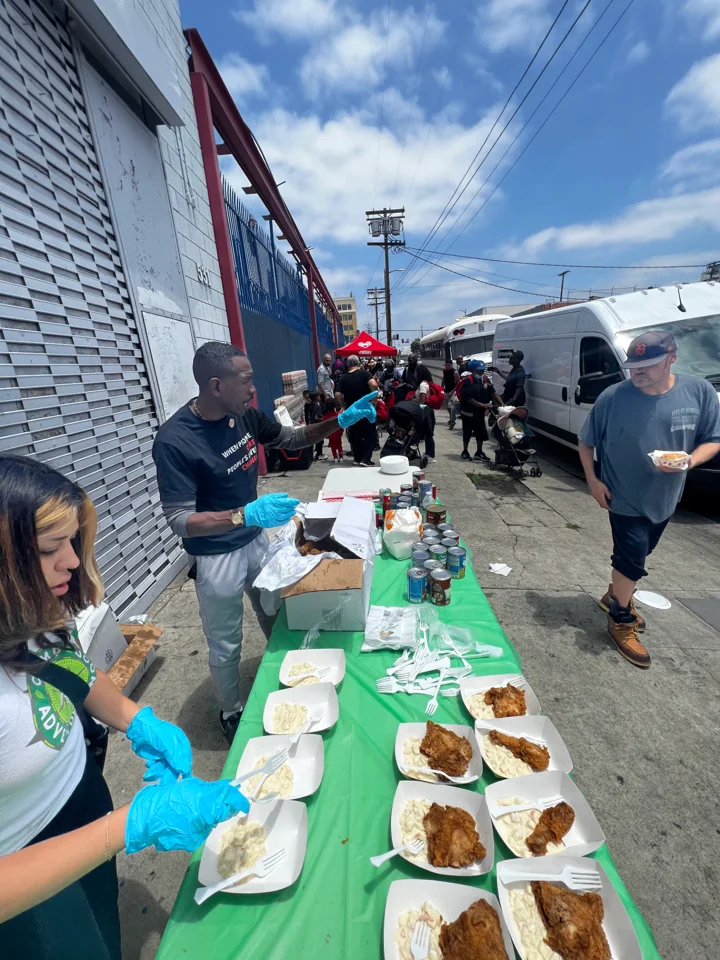
DO GOOD's Skid Row outreach illustrates why continuity matters. Its community outreach is not designed as an occasional corporate activation. Teams return repeatedly to distribute essentials and support people living in extremely difficult circumstances. That consistency creates something that cannot simply be purchased: relationships.
A person may refuse help the first time it is offered. Someone else may initially accept food but decline medical assistance. Over time, familiar faces and repeated contact can create trust. And trust can create opportunities for deeper support.
Corporate partnerships can develop in the same way. A company may begin by donating products. Employees might then become involved. That relationship could develop into recurring financial support, specialist expertise or a larger joint initiative. The company might introduce customers, suppliers or other businesses into the partnership. What began as one contribution becomes an ecosystem of support.
That is why the length of a partnership can be as important as its initial size. A smaller commitment repeated consistently can sometimes create more value than a large one-off activation.
Companies also need credible evidence that their purpose is real
There is a business reason this matters. Corporate reputation and trust are now the leading motivation behind many investments in corporate purpose. Benevity found that 91% of surveyed companies identified reputation and trust as the number-one motivator for investing in purpose programs. At the same time, businesses are putting more money into communications, storytelling and impact reporting.
That creates an understandable pressure to tell stories. But it also creates a risk. If the communication becomes larger than the impact behind it, purpose starts to feel performative.
The most credible solution is not better corporate language. It is better evidence.
A company does not need to manufacture a story if its products have reached thousands of people who needed them. It does not need an elaborate purpose campaign if employees have used their expertise to solve a genuine problem. It does not need to tell customers that it cares about a community if it has supported that community consistently for several years. The action becomes the story.
This is particularly important at a time when businesses are being asked to provide more proof of their social commitments while nonprofits themselves face an increasing reporting burden. Benevity found that 42% of nonprofits are receiving more requests for customized impact metrics and 44% are facing more requests for tailored storytelling. Almost half report absorbing additional requirements through unpaid staff overtime.
A strong partnership therefore needs transparency and accountability without turning the nonprofit into a reporting agency for the corporation. Companies should understand where their support went and what it achieved. Nonprofits should be able to demonstrate meaningful outcomes. But measurement should serve the work rather than consume the resources needed to perform it.
This is where DO GOOD wants to build differently
DO GOOD International was created around the belief that collaboration can make charitable action more effective. The organization works across human, animal and environmental causes, bringing together businesses, volunteers, community organizations and individuals rather than treating each of those groups as separate audiences. Its current network already includes partners from industries as different as food and beverage, logistics, sports, hospitality and consumer products.
Its operating model is unusual as well. DO GOOD describes itself as a volunteer-led organization in which the team contributes its time and talent without salaries, with donations directed toward its mission. For companies, however, the most interesting part of the model may be its flexibility.
DO GOOD is not asking every corporate partner to participate in exactly the same way. One business may be able to fund a program. Another may donate products. A third could provide expertise. Another might activate employees or customers. A logistics company could help move supplies. A hospitality partner might provide food, accommodation or event space. A business with an international supply chain might even help create employment or sourcing opportunities in communities where DO GOOD already has relationships.
That is a much more interesting starting point than simply asking a company for money. It turns the first conversation from "How much would you like to donate?" into "What could we accomplish together?"
That is what effective corporate social impact can look like. Companies have resources. Nonprofits have experience, relationships and knowledge of the communities they serve. Employees increasingly want meaningful opportunities to participate. Communities need solutions that continue long after a campaign has ended. The challenge is connecting those pieces intelligently.
For a company considering its next charitable initiative, CSR program or nonprofit partnership, the most useful place to begin may therefore be surprisingly simple. Look at what your organization already has. Consider the people, products, skills, infrastructure, relationships and resources available to you. Then ask where they could genuinely be useful.
The answer may be a donation. It may be employee volunteering. It may be technology, logistics, employment, professional expertise or something neither organization has considered yet. What matters is that the partnership begins with a real need and develops around the resources capable of addressing it. Doing good should be more than something a company says. It should be something people can see, experience and measure.
Interested in building a corporate partnership with DO GOOD?
DO GOOD International works with companies to develop partnerships based on real needs and the resources each organization can contribute. Whether your company can offer funding, products, professional expertise, employee participation, logistics, venues, distribution or another capability, the first step is a conversation.
Tell us what your company can bring. Together, we can determine where it can make the greatest difference.
Start a Corporate Partnership Conversation
We DO GOOD Together.